Editor's Review:
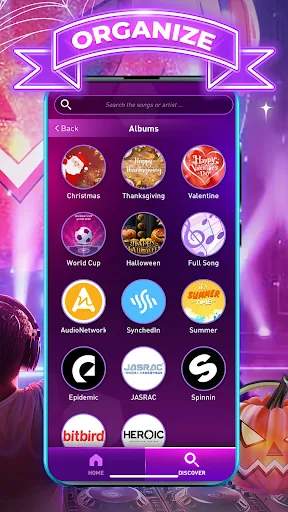
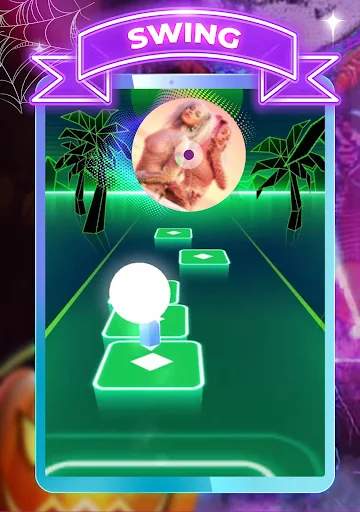
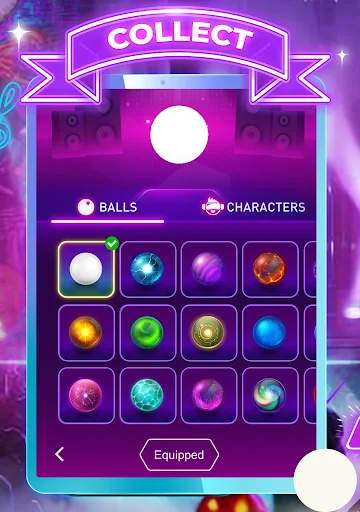
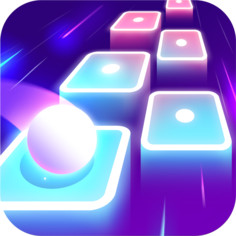
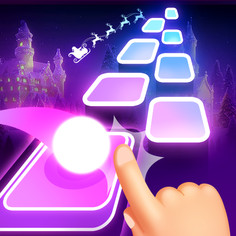
Tiles Hop: EDM Rush! is a music rhythm game. At its core, it combines parkour-like reflex challenges with the timing-based mechanics of a rhythm game. It is not one of those traditional mobile games that merely uses popular songs as background noise and treats tapping as a superficial gimmick. Instead, it is a game that genuinely tries to make players "listen to music with their bodies." Having spent quite a lot of time with Tiles Hop: EDM Rush!, you will feel that what makes it so appealing is not simply that it has many songs, is easy to pick up, or looks visually flashy. Its true strength lies in the way it turns rhythm, spatial prediction, musical memory, and emotional stimulation into a very direct form of gameplay. You are not just listening to a song from the sidelines; you are controlling a ball that moves forward along the very skeleton of the music. Every landing point, every turn, and every successful chain of jumps makes it feel as if you are physically stepping out the melody yourself. That sense of participation is something many music games fail to achieve. If you want a better experience with this game, you should wear headphones. This is not some optional side note; it is almost the proper way to play Tiles Hop: EDM Rush!. You can still enjoy it through speakers, of course, but then it feels more like following a metronome with your fingers. Once you put on headphones, however, the low-end drive, the layers of percussion, the buildup before a transition, and the suspense right before the drop all come through much more clearly. This is especially true with electronic tracks, where the sense of space and pulse becomes much more vivid. At that point, you are no longer guided mainly by what you see, but by what you hear.
That is also where the game reveals its intelligence. At first glance, its mechanics are deceptively simple. You just need to swipe left and right so the ball lands on the next tile. The rules are so straightforward that they almost seem too thin to sustain long-term engagement. Yet what truly makes the game hard to put down is how effectively it taps into humanity's natural love of patterns and music. Music is never random; it constantly establishes, repeats, transforms, and fulfills structures. And from a very early stage, the human brain begins detecting patterns, associating rhythm, melody, repetition, and variation with emotional and cognitive responses. This is why Tiles Hop: EDM Rush! becomes so addictive. The true reason is that it speaks to something deeply wired into us. The real hook of the game is that, over time, you begin to find the pattern within each song. The first time you play a track, you may simply be trying to survive. By the second or third attempt, though, you start noticing that a certain turn aligns with the snare, that a diagonal jump syncs with the song's lift toward the chorus, or that a string of closely spaced tiles reflects a carefully structured rhythmic subdivision. At that stage, the pleasure you get is no longer just "I reacted quickly," but rather "I understood this song." Human beings are particularly vulnerable to this kind of pleasure. The satisfaction derived of discovering order within what first seemed chaotic is huge. And when that order is musical, the result becomes especially compelling.
Many players think of Tiles Hop: EDM Rush! as just a casual mobile game you can play while listening to songs. In fact, it recreates one of the core mechanisms of music enjoyment itself. Playing this kind of music game helps you feel different vibrations more distinctly, stimulates the emotional regions of the brain, increases blood flow to areas linked with feeling, and triggers the release of dopamine. What is especially interesting is that once you become familiar with a particular song, your body does not even need to wait for the climax. Just a few seconds after hearing the opening or recognizing the structure, dopamine can already begin to surge. That is why, when you replay a familiar track in Tiles Hop: EDM Rush!, you often feel excited not when the chorus or drop actually arrives, but in the brief seconds right before it. Your hands become steadier, your focus sharper, and your body seems to anticipate what is about to happen. This game turns that anticipation into a gameplay loop. Once you know a song well, every bounce of the ball feels like an advance payment on emotion. The appearance of the next tile is no longer only a matter of visual reaction; it feels as though your body already knows where it needs to go. This creates a fascinating state, that is, you literally sense the music as vibration, your emotional centers are activated, and your excitement and concentration rise together. Of course, a game is not a medical treatment, but it undeniably creates a striking body-mind connection. The music pushes you forward, while your successful control over the ball intensifies your immersion in the song. What it offers is not just "fun," but a rapid ignition of emotion that brings both mind and body into rhythm.
From a design perspective, one of the game's strengths is that it understands its own boundaries. It never tries to become a brutally difficult, hardcore rhythm game, nor does it overload itself with complicated judgment lines. Instead, it reduces everything to a direct cycle. You just need to listen, predict, swipe, hit, keep listening. That makes it extremely accessible, but there is still a clear distinction between merely being able to play and truly playing well. Once you become skilled, you begin to pursue flow rather than isolated accuracy. You seek bodily synchronization with the entire track instead of just reacting to individual moments. This evolution, from "playing the mechanics" to "playing the flow", is the most professional and underappreciated quality of this game.
But the game is not without flaws. The quality of track mapping is not always consistent. Some songs are mapped beautifully, to the point where every landing feels as though it strikes the very heart of the beat. Others feel more like the melody has simply been chopped into a playable path. Even so, this limitation will not impact your game experience. And what you will value most about Tiles Hop: EDM Rush! is the way it activates musical memory. Some songs you may have heard in everyday life without forming much of a connection to them. But once you have navigated a difficult section of them in the game, they are never the same again. Later, when you hear them elsewhere, you do not just remember the melody itself; you remember the pleasure of hitting that sequence perfectly, or the frustration of missing a jump, or even your emotional state during that stage of your life. Some songs bring back not only the music, but also good or bad feelings and old memories, because they leave an imprint. Music already has that power on its own, but the game intensifies it, because your body has participated in the experience. What you remember is no longer just a sound, but an experience jointly sealed by action, emotion, and memory. Another things you will especially appreciate is how the game reinterprets the experience of hearing the same song again. In Beethoven's era, it was not easy for ordinary people to enjoy the same piece repeatedly; music was difficult to reproduce and rehear at will. Today, by contrast, we are drowning in music. Playlists, short videos, and streaming platforms have made repetition cheap, and as a result our ears often become numb. By the twentieth repetition of a song, what remains is usually familiarity, not wonder. Yet Tiles Hop: EDM Rush! can sometimes break through that numbness. When you become truly absorbed in the game, you feel as though you are hearing the song for the first time. Not because the music has changed, but because you are sensing its structure, its force, and its breathing all over again. You are not merely playing the song in the background. Actually, you are moving through it.
Many people normally let songs fill empty space in their lives. But in Tiles Hop: EDM Rush!, music becomes the center of attention again. You search for the beat, wait for the transition, memorize the structure, predict the next landing, and anticipate the climax. Your ears are no longer drifting in the background; they are compelled to focus. More importantly, the game makes you literally feel that music is universal. Even if you do not understand the lyrics, even if you are unfamiliar with the cultural background of a track, as long as the rhythm and the emotional energy are there, you can still connect with it through play. The ball jumps, the tiles extend into the distance, the chorus rises, and in that moment you do not need to first understand the concept in words. In fact, you understand it as feeling. That ability to cross language and go directly into the body and emotions is one of music's greatest powers, and Tiles Hop: EDM Rush! succeeds in turning that power into something playable.
Taken as a whole, Tiles Hop: EDM Rush! is not a game with enormous systemic depth or long-term complexity built on progression systems and numbers. Its depth comes from the loop formed by music, neural response, memory, and pattern recognition. It may not have the most complex mechanics, nor the most exquisitely crafted charts in the genre, but it knows exactly what it wants to give the player, that is, a rhythmic immersion that pulls in the ears, the fingers, and the emotions all at once. Its real achievement is not that it lets you hear music, but that it lets you enter it. So the conclusion is Tiles Hop: EDM Rush! is a polished, emotionally driven mobile rhythm game with a remarkably accurate understanding of musical pleasure. Its commercialization and uneven content quality still leave room for criticism, but when you put on headphones, find a song that matches your frequency, and gradually learn its patterns, what it offers is not a cheap thrill but a rare, almost physiological kind of delight. And that is why it is more than just a game for passing time. At its best, it reminds you why human beings are naturally drawn to rhythm, captivated by melody, and so willing to sink back into a familiar song only a few seconds after it begins!