Editor's Review:
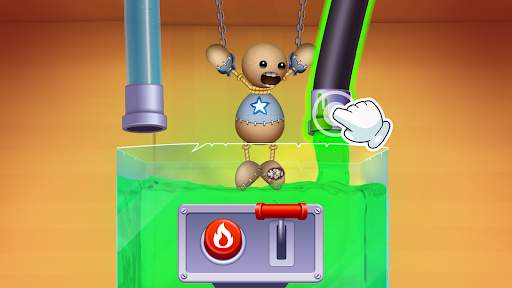
Kick the Buddy is a stress-relief physics-based interactive game. Once you truly immerse yourself in this world, you begin to realize that its greatest strength is not the number of weapons, nor the explosion effects, nor the exaggerated impact sounds of every hit. Its real brilliance lies in the fact that it almost completely removes the "absolute purpose" on which traditional games usually depend. There is no kingdom that must be protected, no companion who needs saving, no profession, no faction, no moral path, and no system telling you what kind of person you should become. The game only brings you fun. You do not have to carry any burden. It converts the energy and emotions that have nowhere to go in real life into an arena with almost no restraints. What tool you use, what rhythm you choose, from what angle you strike, whether you pursue a chain of continuous attacks or suddenly improvise some absurd little performance, all of it is up to you. The game does not rush you, and it does not judge you. You are not acting for the sake of system rewards. You are selecting a certain weapon because "this is what I want to do right now." That feeling is extremely rare. In a highly programmed mobile game, you briefly regain control.
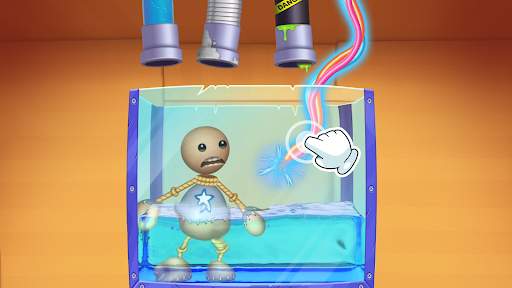
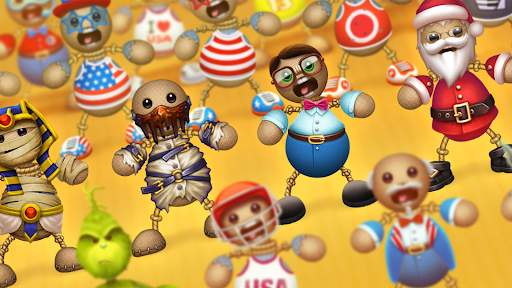
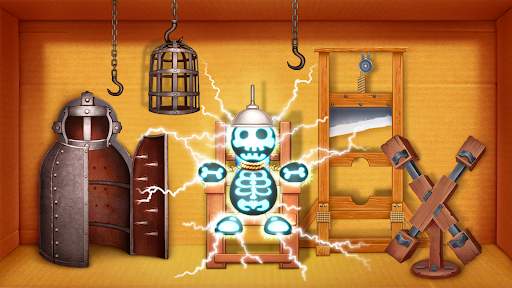
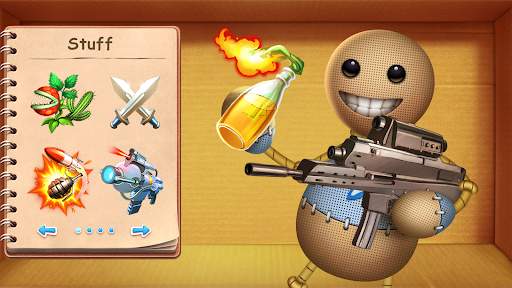
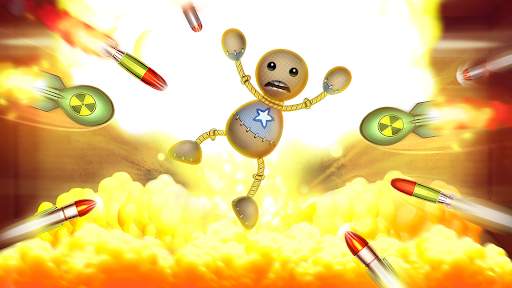
From the design perspective, Buddy as a character is very clever. He is not a realistic human being, nor a truly vulnerable victim who would provoke strong moral discomfort. Instead, he exists somewhere between a doll, a puppet, and a cartoon figure. Because he is sufficiently unreal, you can quickly establish a safe psychological distance. You know you are doing something absurd, but you also know that this absurdity will not harm anyone in the real world. As a result, destruction stops feeling guilty and starts feeling ritualistic, tinged with comedy. Buddy gets blown away, shocked, stretched, and bounced repeatedly. These actions are amusing not only because the physical feedback is exaggerated, but also because they translate what should have been unsettling violence into a theatrical form of absurd performance. So this interaction with Buddy not only helps you relieve stress, but also teaches you to accept absurdity. In real life, absurdity usually means loss of control. Effort and reward are disproportionate, rules change at any moment, emotions have no outlet, and many things are inexplicable. People become frustrated because of this. But in Kick the Buddy, absurdity becomes something that can actually be embraced. What you face is not a world that needs to be understood, but a stage that allows you to behave however you like. Rockets, bombs, guns, strange props, and exaggerated physical collisions turn irrationality itself into a source of pleasure. The absurd in real life exhausts people. The absurd here becomes addictive. The key transformation lies in mentality. Faced with meaninglessness in reality, you are trapped. Faced with meaninglessness here, you participate. You are no longer the person swallowed by absurdity. You become the one creating it.
In Kick the Buddy, satisfaction comes from improvisation. You are not playing for a result. You are constantly producing results while you play. Today you might prefer close-range punching and kicking, enjoying the rhythm of each deformation in Buddy's body. In the next session, you may suddenly feel like using ranged weapons to bounce Buddy around like experimental material. A little later, you may become fascinated by the chain reactions created by different combinations of props. The most captivating part of the game is never the depth of any single system, but the way these systems continually encourage you to improvise on the spot. Many similar games limit creativity. Kick the Buddy encourages recklessness, improvisation, and that impulse of "I do not know what will happen if I try this, but let me do it anyway." After spending enough time interacting with Buddy, you realize that you are not engaging in mechanical violence. You are actually performing, arranging, designing, and experimenting. That awakening of creative instinct feels very real. So at the first sight, this game appears to be about "torturing Buddy," but in reality what it tortures is your sense of reality itself. In a certain sense, you are doing to Buddy what real life does to you. Real life keeps pushing you around, making you endure pressure without reason, petty repetition, and rules that cannot be justified. In this world, however, you reorganize all of that into movements that are funny, controllable, and watchable. It is a kind of rebellion tinged with dark humor. It is not a loud or grand rebellion, but a private and ordinary one.
This experience brings to mind Albert Camus's famous line from The Myth of Sisyphus, "One must imagine Sisyphus happy." Since there is no absolute purpose, the game simply turns action itself into pleasure. Buddy is launched into the air, falls back down, and is launched again. The cycle itself has no noble meaning. Yet inside that cycle, you keep adjusting rhythm, inventing methods, and finding new points of amusement, and from that emerges a strange kind of satisfaction. To put it plainly, this game processes "meaninglessness" into "pure fun." Of course, as a serious review, this cannot be only about emotional projection. The tactile feel and audiovisual feedback of Kick the Buddy are the technical foundations that allow it to function over the long term. Its physical feedback is very "human-aware." It does not pursue realism. It pursues the timeliness of pleasure points. Hitting, bouncing, falling, and repeated collision all give you clear responses. This kind of high-frequency, low-threshold, instantly visible feedback is one of the most important drivers of retention in mobile game experiences. The sound design is direct enough. It does not take detours, and it does not attempt complicated layering. Instead, it turns each interaction into a short and immediate punctuation mark for the nerves. Combined with coins, unlocks, weapon switching, and these light progression loops, you do not feel completely adrift simply because there is no story campaign. The game does have structure. It is just a structure built on weak goals, strong feedback, and improvisation.
However, Kick the Buddy also has obvious limitations. Its depth is not depth in the traditional sense. You cannot expect it to become increasingly complex in the way a strategy game does, nor increasingly layered in the way a narrative game does. It is more like a toolbox for emotional management. The core experience is strong, but its boundaries are also very clear. After long-term play, although there are many props and many forms of spectacle, repetition will still emerge once you stop actively inventing ways to play. In other words, this game depends greatly on your willingness to participate. Are you willing to treat it as a space where you can keep improvising and performing, rather than as a product waiting to be completed? Even so, Kick the Buddy is a game whose "experience structure" has been underestimated. It looks childish on the surface, but in reality it understands the psychological condition of modern people extremely well. Every day, we move back and forth among goals, identities, norms, efficiency, and emotional suppression. Many times, the problem is not that we lack entertainment, but that we lack a truly personal space of freedom, one that requires no explanation. The most precious thing about Kick the Buddy is that it temporarily cancels these identities. You do not have to be a good employee. You do not have to be a qualified adult. You do not have to be someone who is always constructive. You are simply here, together with a doll named Buddy, carrying out a game action that has no absolute purpose and yet works with surprising effectiveness.
What is even more interesting is that this experience quietly shatters a common dualistic way of thinking: that only seriousness has value, while absurdity is a waste; that only meaningful things are worth investing in, while meaningless things should be dismissed. Kick the Buddy proves that the human mind does not really work in such a neat binary. Sometimes what truly helps you is not a grander meaning, but a space that offers no moral lecture whatsoever and still allows you to put down your need for control. You laugh here not because the content is sophisticated, but because your body and your emotions are finally synchronized. You feel creative here not because the system rewards "creativity," but because the system never stops you from acting wildly. It restores "play" to being play itself. Playing with Buddy will help you gain pleasure within absurdity, improvisation within repetition, and relief within destruction. While you are tormenting Buddy, you keep laughing. And many strange but wonderful ideas come into your mind. During those few minutes, nothing in the real world may truly satisfy you, yet this ridiculous little world somehow does. So the real brilliance of Kick the Buddy is not that it lets you hurt a doll. It is that it lets you reclaim, in a frivolous, exaggerated, and even undignified way, a small part of your right to interpret life for yourself and to have fun!