Editor's Review:
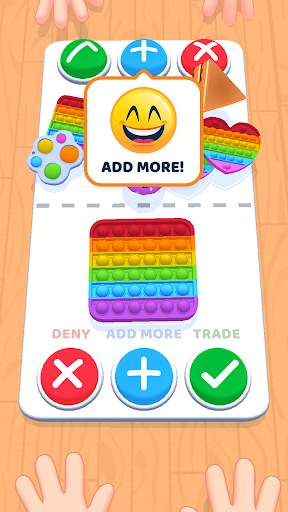
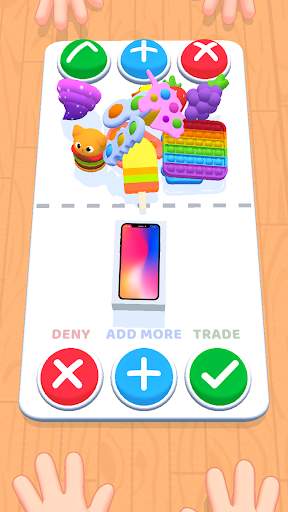
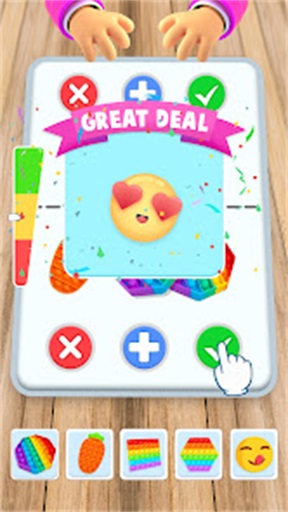
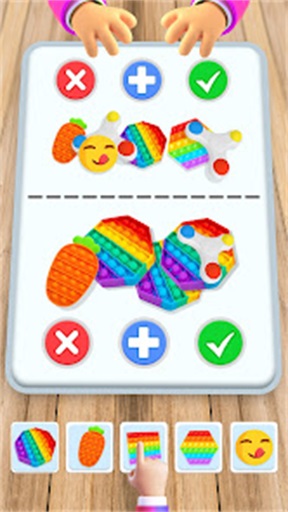
Fidget Toys Trading: Pop It 3D is a casual simulation game based on social exchange. When you first come into this world, you may not have high expectations. The visuals are not stunning, and the controls feel almost too simple. You drag a toy to another player's window, click confirm, and the trade is completed. You might even think this kind of "toy swapping" gameplay will not hold your interest for more than an afternoon. Yet, here you are, still playing, and perhaps even reflecting on it more seriously, because this game can genuinely change the way you understand what a game can be. Winston Churchill once said that, "We make a living by what we get, but we make a life by what we give." That sentence captures the soul of this game more precisely than anything else. You will quickly discover that what determines the quality of your experience is not your skill or your strategy, but the players you meet. There are always one or two players who are so generous that they make you question reality. They offer their own favorite toys to you without hesitation, and sometimes, even add more when you hesitate, just so you can get the toy you have been looking at. They do not care whether the value of your toy matches theirs. They do not worry about whether you can give something good in return. In that moment, you realize that in this world, the sense of loss does not exist. The feeling of being surrounded by kindness allows you to relax entirely. Quietly, you begin to hope that the next player you match with will be the same kind of person. It is not because you want to take advantage of them. It is because you know that after a round with such a player, you will finish the session with a smile on your face.
This kind of emotional value cannot be bought with money, no matter how much you spend. As you complete more and more trades, your collection gradually becomes richer. The toys you love most, you want to see them again and again, rotating them to see every detail, even memorizing their serial numbers and rarity levels. They are no longer just pixels and data. Behind each one is a memory of a trade. This one came from a player named "Sunny" whom you met late at night. That one was obtained after hesitating three times before you finally let go of another toy. Slowly, these toys become your trophies. What is truly wonderful is that this sense of achievement does not come from outnumbering others or climbing rankings. It comes from the process of obtaining them, which will also make you feel so happy. This happiness is light, but it feels very real. It does not occupy your mind all the time, but it emerges at unexpected moments and keeps you smiling for the rest of the day. At this point, you may ask something like this, "With such simple gameplay, do I ever get bored?" In truth, after playing for months, you have not only avoided boredom, but have become more and more addicted.
The charm of Fidget Toys Trading: Pop It 3D lies precisely in its simplicity. You do not need to learn complicated combos. You do not need to memorize stat tables. You do not need to plan long-term strategies. All you do is come into this world, wait for a stranger, and begin an unknown conversation. You never know what kind of toy or what kind of player you will encounter next. It could be a dull and ordinary trade. It could also be a warm encounter that you remember for a long time. This uncertainty keeps a small sense of anticipation and joy alive in your heart. What is even more interesting is that at some unexpected moment, a thought will occur to you. You no longer want to receive. You want to give. You want the stranger on the other side of the trade to feel the same joy that you have felt before. So you make an "irrational" decision. You take the toy you love most and give it away without asking for anything in return. At that moment, you are no longer trading. You are simply offering kindness. It is not just about offering warmth to a stranger. It is like planting a seed of goodwill in this virtual world. You believe that this seed will grow somewhere, in some way. It is this cycle, meeting generous people and becoming a generous person yourself, receiving happiness and passing it on, that gradually brings you into a very special state of mind. You stop calculating gains and losses. You stop worrying about whether you have gotten a good deal or a bad one. You simply enjoy the act of exchange itself. Back then, you had no concept of price or value. The only reason you traded was because you liked something, or because you wanted to make the other person happy.
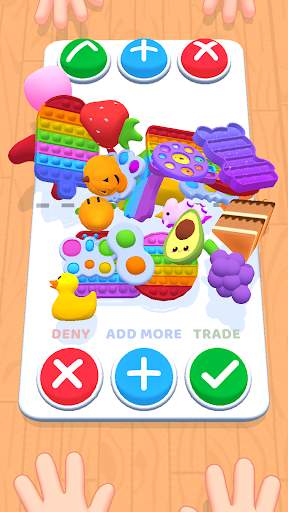
In this game, you become a child again. There is no adult pressure. There are no KPIs. There is no complicated interpersonal strategy. All you need is a simple heart, ready to trade, to interact, and to smile. In the later stages of the game, when you see a full display of toys, even though they are only virtual data with no real monetary value, a very strong feeling rises from deep inside you. You feel like a millionaire. This sense of abundance is not about material things. It is a feeling of emotional abundance. You feel that you own a lot, not because you have the most expensive toys, but because you have taken part in so many meaningful exchanges and met so many interesting people. You have accumulated a kind of experiential wealth, a collection of memories and emotions that no store can sell. At the same time, you will be surprised to discover your own potential for trading. At the beginning, you simply accepted whatever the other player offered. Later, you learned to observe their preferences, "Are they staring at a certain type of toy? Are they repeatedly browsing your collection?" You start to think about what kind of toys they truly want and how you can make both sides happy. You may even gently guide the direction of a trade, turning what could have been a deadlock into a cooperative, fun and pleasant interaction. You come to realize that trading is never just about the movement of objects. It is also about understanding others and communicating emotions. This ability, once you step outside the game, has great value in real life and in your work as well.
If you are a parent, this game offers an additional layer of meaning. I strongly recommend playing it together with your child. During the process of trading toys, you will observe your child's way of thinking very directly. "Is your child cautious, always waiting to see what others have before making a move? Or is your child is a person who is willing to take risks and to initiate trades even if the outcome is uncertain or unfavorable? Does your child care more about what they can get, or do they also consider the other party's feelings?" More importantly, when there is a big gap between the toy your child really wanted and the toy they actually received, what kind of reaction your child will show? Do they feel disappointed, angry, or even cry? Or do they adjust quickly, accept the situation, and look for new opportunities? These are not things you can easily observe in daily life. But within a few simple rounds of this game, your child's personality will naturally show through. You will learn answers for questions like, "Is your child learning to compromise or to persist? Is your child expressing emotions or trying to communicate?" All of this becomes a window for you to understand and guide your child.
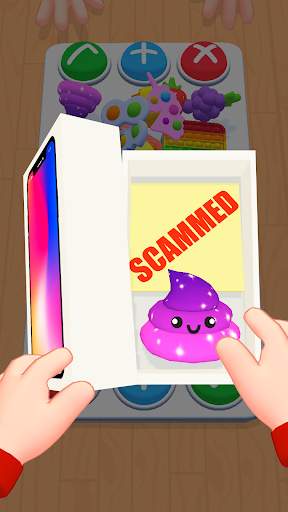
Of course, no game is perfect. The biggest weakness of Fidget Toys Trading: Pop It 3D is that the experience depends heavily on the player community. If you keep matching with players who are overly calculating, players who only want to trade their worst items for your best ones and leave the session as soon as things do not go their way, the experience can suffer. However, from another perspective, it is precisely these unpleasant players that make the generous ones so precious. It creates an emotional space. What you get here is not only a collection of items, but also a long-missed sense of ease and a simple, effortless kind of happiness. When you leave the game and the screen goes dark, the virtual toys disappear. But strangely, that gentle, warm feeling stays with you. It does not make you excited or agitated. It simply accompanies you, and at some ordinary moment, it reminds you of those small toys and those warm strangers again. If you are willing to give this game some time, I believe that at some unexpected moment, it will help you rediscover what the phrase "simple joy" truly means!