Editor's Review:
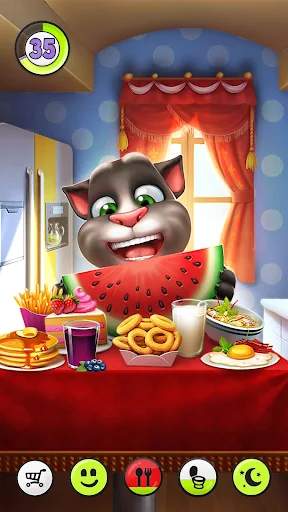
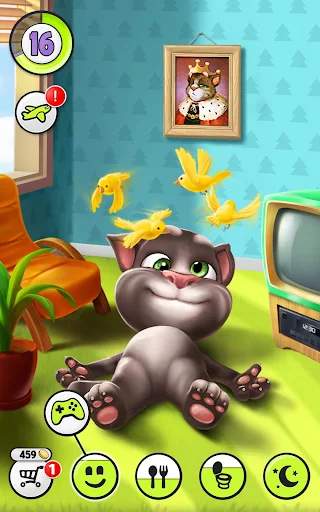
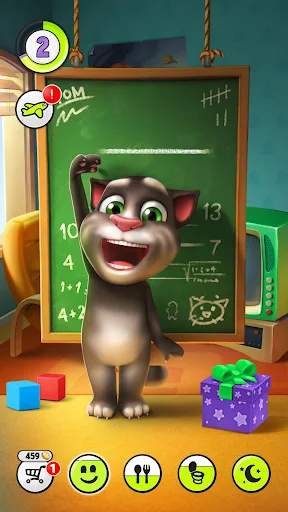
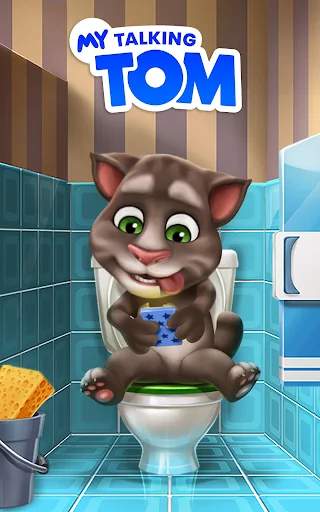
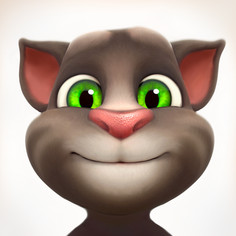
My Talking Tom is a casual mobile game revolving around virtual pet raising and light interactive management. Players take care of Tom by feeding him, putting him to sleep, taking him to the bathroom, and managing his mood, while also sustaining his long term cycle of growth and feedback through mini games, outfits, furniture, and travel-based collection features. But it is simple about feeding a cat, tapping the screen, and earning a little gold. After playing for a while, you will find that the most valuable part of this game is not how lively it is, but how it turns the act of care into a lasting relationship structure. Tom does not offer a complex narrative, nor does he give players a grand objective in the way a traditional role playing game would. He simply keeps returning the most basic needs to the player. He gets hungry, sleepy, bored, and eager for interaction. What the player does every day may seem mechanical, but in fact it is a repeated answer to one question: "What exactly is Tom to you?" Is he merely a system object that produces coins and experience or is he a companion that deserves your time and attention?
On a deeper level, it feels like an extremely simplified device of self projection. Tom repeats your voice and responds to your taps with exaggerated expressions and movements. This design makes him feel less like an ordinary pet and more like a vessel shaped by your own rhythm of living. If you are impatient, he becomes a container waiting for numbers to be cleared. If you are patient, he gradually develops into something that carries a real sense of companionship. The difference does not lie in any change within the program itself. It lies in whether the player is willing to place real attention into the experience. Dostoevsky wrote a line in Crime and Punishment that fits this game extremely well, "To go wrong in one's own way is better than to go right in someone else's". The quote fits My Talking Tom not because it encourages rebellion, but because the experience becomes weaker when players rely on so-called optimal paths instead of their own choices. Many players approach this kind of game by being led entirely by an external logic. How can progression be faster? How can coins be collected more efficiently? From the perspective of outcome, this seems acceptable. From the perspective of experience, however, a player is sacrificing a real part of the self. The player is not really playing with Tom. The player is simply cooperating with a loop that repeatedly demands attention. What deserves caution is not only what we gain in the end, but also what we give up for that result. What makes My Talking Tom so interesting is that it lets the player feel, in a very gentle and almost non aggressive way, how self reduction takes place. A player can absolutely turn Tom into a task board for efficiency, turn mini games into currency tools, and turn outfits and furniture into displays of accumulation. It can be played that way, and even played skillfully. Yet over time the whole experience empties out. What gets sacrificed is the part that asks how I truly want to relate to this game. Once that disappears, repetition is all that remains.
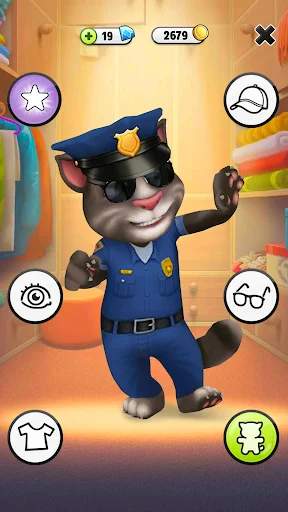
On the other hand, when time is invested for a pleasure that is real and personally meaningful, this game begins to produce a rare form of self affirmation. You will begin to build a personal rhythm. You will enter this world whenever you want, check Tom's condition, and decide whether today will focus more on care, interaction, or mini games. You will develop stable preferences in clothing and furniture instead of chasing whatever is most expensive. You will turn travel and album collection from mere completion into a way of leaving traces behind. At that point, the time given to Tom is no longer passive consumption. It becomes a clear expression of personal taste. In a certain sense, you are not just raising Tom. You are also using Tom to confirm what kind of rhythm, feedback, and companionship truly feels right. So My Talking Tom is not a game that wins through an overwhelming amount of content. What truly works here is the way it turns tiny everyday actions into stable units of life that can be revisited. Feeding, sleeping, cleaning needs, playing mini games, changing outfits, and arranging the environment are all simple actions when viewed separately, perhaps even extremely basic ones. Yet when they are linked into a loop, Tom begins to feel like a second schedule that requires continuous care. The better part is that it does not force you into one single correct mode of engagement. It can be experienced as brief companionship or as a long term habit. This flexibility is something many casual games fail to achieve.
On the level of systems, the most successful design choice is not the novelty that Tom can repeat your voice. It is the quality of response. Every piece of feedback is immediate and clear. Happiness, dissatisfaction, fatigue, and contentment are all communicated in ways that can be recognized instantly. The brilliance of this design lies in how it transforms complicated emotional management into an interactive language that almost anyone can understand. The player does not need lengthy tutorials. For this reason, the game quietly reminds the player of something equally important in real life. Life really begins when you find yourself, not when you are merely coping with everything passively. On the surface, Tom is pushed around by external demands. He eats when hungry, sleeps when tired, reacts when tapped, and repeats when spoken to. Yet after playing for a long time, you realize that the person who must not live like Tom is actually the player outside the screen. If a person in real life also does nothing more than produce conditioned responses to surrounding noise, then there is no essential difference between that person and Tom. There is reaction, but no choice. There is movement, but no direction.
This is why the most thought-provoking quality of My Talking Tom is that it offers a kind of mirrored lesson through contrast. Tom reacts instantly to every external stimulus, while the player, through taking care of him, gradually understands the importance of remembering who one is and what one actually wants. Only when you stop living as a background figure, and stop allowing systems, expectations of others, and outside vanity to determine your rhythm, do you truly enter the effective experience of this game. You are no longer floating through a stream of nonsense and processing each little disturbance as it arrives. Instead, you begin to arrange, filter, and assign meaning with intention. Tom may still repeat what you say, but you no longer allow yourself to become a person who only echoes what comes from outside. Of course, this game is certainly not without problems. The core loop is very solid, but it does expose repetition in the middle and later stages. If the player cannot actively add a personal rhythm to the experience, daily care can quickly slide from companionship into routine check in. Although the mini games and collection systems do help relieve the fatigue created by repeated care tasks, they mostly serve as lubrication rather than true gameplay transformation. Even so, this game is perfect for players to enjoy during their spare time. It is not a grand game to shock the player, but to accompany many fragmented moments of ordinary life. It understands that it does not need to offer everything at once. Instead, it keeps the player within a gentle relationship through continuous and fun feedback.
In conclusion, the true strength of My Talking Tom does not lie in having an astonishing volume of content. Its strength lies in how well it allows a simple system to grow emotional weight. The more real preference, real rhythm, and real attention you place into it, the more it changes from a child oriented virtual pet application into a small mirror of your own condition. You also begin to understand that the worst way to play is not to play slowly, clumsily, or inefficiently. The worst way to play is to erase yourself and leave behind nothing but obedience to instructions of system. In that sense, the most mature part of My Talking Tom is not that Tom can talk. It is that the game forces you to see something clearly. If a person does nothing but respond to external stimulation and forgets who one is and what one wants, then that person can become just as easily molded as Tom on the screen. In contrast, when you arrange this relationship in your own way, even if it is not optimal, you are no longer a background character in your own life. You are not some standard answer trained by conditioned response. You are the person who decides how to live, how to invest attention, and how to preserve what is real within the self. For a virtual pet game, it is well worth experiencing. Beyond learning how to care for a pet, you may begin to see Tom as a mirror, helping you understand yourself more clearly, find your place in the real world, and reflect on how to stay independent rather than simply echoing others, and how to truly live!