Editor's Review:
Scary Teacher 3D is a casual game combines stealth, pranks, and puzzles. First, the terrifying teacher in the game is not merely an antagonist; she is more like an external projection of the your inner state. According to the concept of inner frequency, the external situations one experiences often match one's emotional and cognitive frequencies. In the game, you constantly encounters the teacher's pursuit and threats, and this tension and confrontational nature, to some extent, echoes the anxiety, tension, and even the retaliatory mentality generated while you are exploring the evil teacher's house. In other words, every encounter with the teacher can be understood as the result of a frequency match. Secondly, the law of resonance is also metaphorically reflected in the mechanism. The teacher does not act randomly but responds to the frequency you broadcast. The more drastic you behave, the more the confrontation escalates, forming a continuous reinforcing energy loop. From the perspective that nothing happens by chance, the level design and event triggering in the game can also be regarded as a necessary experience. Every discovery and every successful prank is the result of your choices and actions, rather than pure randomness. This design makes you gradually realize that the environment is not disordered; it is closely related to your own decisions.
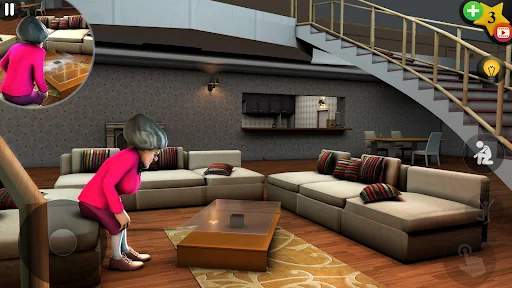
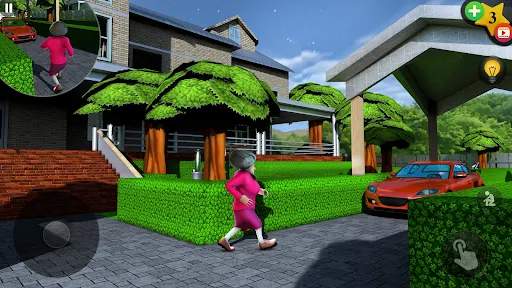
Starting from a realistic perspective, it means that the conflicts or challenges you experience are often extensions of your internal states. Furthermore, every interaction with the teacher can be understood as a process of exchanging resonance energy. In the game, you constantly test boundaries and create events, while the teacher continuously provides feedback and countermeasures. This back-and-forth interaction is essentially a circulation of energy. Depending on your intentions when entering the game, such as revenge, curiosity, or entertainment, the game will provide a corresponding experience, thus forming a closed loop. From a gameplay perspective, Scary Teacher 3D is simple to operate, has a light rhythm, and features creative level design, making it suitable for playing during fragmented periods of time.
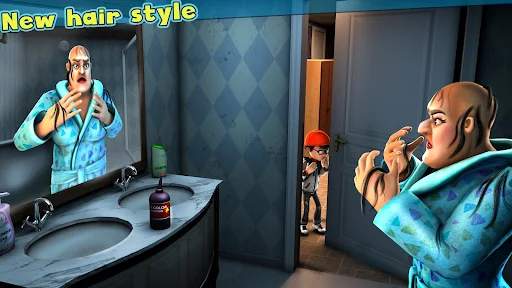
However, when viewed from a deeper perspective, it is not just a prank game, but more like an interactive model of how internal states affect external experiences. The relationship between you and the terrifying teacher is not merely adversarial, but also reflective, like a mirror. And in the game Scary Teacher 3D, what is most addictive is never just the prank itself, but a very complex psychological experience. Because you are not facing an ordinary NPC, but a teacher who is deliberately portrayed as evil, domineering, irritable, and repulsive. She is not simply "bad", but the kind of person who makes people naturally want to rebel: she is depressing, makes people want to escape, and makes people want to humiliate her, tease her, and watch her get out of control. And because of this, every prank you plays in the game is not just about completing a task, but rather like a carefully designed "counterattack" with personal emotions. When you manage to set one trap after another and watch her fall into them step by step, with distorted expressions, exasperation, and even rage, that kind of joy is not the usual sense of "fun", but more like an unprecedented sense of release and relief. At that moment, you will feel that you are not being mischievous but "seeking justice". Even if that justice is just virtual, the emotion is very real. Because the game portrays the teacher as a source of oppression through character design, when she is finally played around by you, you get a sense of near-revenge satisfaction.
It is not a simple victory, but an illusion that the mental order has been restored: the person who was once high up, quick-tempered, and controlling is now being toyed with by you. But what is really amazing about this game is that it does not push that pleasure all the way through, but deliberately buries a lot of risk and uncertainty in the middle. You could be discovered by this teacher at any time while setting up pranks, sneaking into rooms, searching for props, and calculating timing. Once caught by her, you, who were once in control of everything, will instantly change from "hunter" to "prey". Then your mood will take a sudden turn: the moment you were secretly smug, the next second you will be in terror, panic, frustration, remorse, and even a sense of shame that everything has fallen apart. This contrast is one of the reasons why the game is so addictive. So the process of playing Scary Teacher 3D is essentially like taking an emotional roller coaster ride. You are not experiencing steady joy, but a constant tug of emotions: first the excitement of planning, then the tension of execution, then the anticipation of near success, then the explosive satisfaction when the teacher gets caught, or the sudden plunge into fear and frustration when you get caught.
What is even more interesting is that the effect does not completely end when you quit the game. Many times, even when you are not playing, the teacher's angry, distorted, and furious face will still involuntarily come to your mind. She seems not just a game character, but something that keeps occupying your imagination. You would unconsciously think, "Is there any more extreme way?" "Would it be more effective if this prop were combined with that scene?""How can I make her more disheveled, more broken, more frantic?" That is to say, the game leaves a constantly functioning "prank generator" in your mind. Your thinking will start to diverge automatically, no longer content with existing routines, but constantly extending, piecing together, and reassembling new prank ideas. Psychologically speaking, this phenomenon is actually quite logical. Because the game gives you a very special outlet: it allows you to release a side that you would not easily show in a safe virtual world. In reality, you may need to be restrained, polite, and well-behaved; but in this game, you are encouraged to be cunning, to retaliate, to sabotage, and to test the emotional boundaries of others. So you begin to see the part of yourself that is usually suppressed, a bit darker, a bit harsher, a bit more mischievous, and a bit more perverse. The point is not that you have really gone bad, but that for the first time you have felt so clearly that there is also a less bright but highly creative destructive desire within you.
The reason why this "seeing and releasing your perverse side" gives an almost perverted sense of satisfaction is that it satisfies several layers of psychological needs at the same time. The first layer is the satisfaction of defying authority. This teacher symbolizes an oppressive controller in the game, and every time you manage to mess with her, it is like you are overthrowing an unreasonable authority. You will feel that you are no longer passive, no longer weak, and no longer only able to endure humiliation. The second layer is the satisfaction of intellectual dominance. You do not beat her by brute force, but by observation, calculation, infiltration, planning, timing judgment, and creative thinking. This gives you a sense of superiority that "I am much smarter than her." No matter how fierce or irritable she is, she is still someone you can play with. The third layer is the satisfaction of the legitimization of dark imagination. There are many bad ideas in reality that cannot and should not be carried out; but games turn those ideas into actionable gameplay. So the "tricks" that usually only flash by are suddenly allowed to exist, encouraged to be practiced, and even rewarded with feedback. This creates an unusually intense psychological pleasure, as it transforms repression into performance and taboos into pleasure. The fourth layer is the hollow relaxation after emotional release.
When the teacher finally becomes furious, loses her composure, and breaks down, you gain more than just a laugh, but a sense of relief after release. It feels as if some kind of hostility, grievance, or resentment that has been weighing on your mind is pushed out in a compensatory way through this character. So you feel relief, not simply happiness. If you go a bit deeper, the appeal of Scary Teacher 3D lies in the fact that it turns a prank game into a half psychological thriller and half black comedy experience. On the surface it is a prank, but underneath it is a cycle of domination and counter-domination, repression and rebound, fear and pleasure. You hate the teacher while being deeply attracted to her: you want to make her angry while you are afraid she will find out; you think your ideas are very bad while you are also excited and satisfied because this "bad" is so creative and so effective. It is this kind of contradiction that makes the entire experience feel distorted, addictive, and exceptionally real. So when you play this game, you are not simply "doing a task", but rather experiencing a psychological revenge drama packaged as entertainment. With your wisdom and hands, you conquer this irritable, evil, and repulsive teacher again and again, and in the process you experience not a single emotion, but a series of feelings that clash with each other: the thrill of revenge, the tension of stealth, the terror of failure, the ecstasy of success, the repeated aftertaste in your mind, and the subtle infatuation with your own dark side. It is precisely because of this that the game creates a very special sense of immersion: you are not a bystander, but more like someone directing one small trial after another against the "wicked". And whenever she is driven to the point of losing control of her rage, the part of you that is usually suppressed will briefly raise its head and reveal a mischievous, hidden, and even somewhat morbid, satisfied smile!