Editor's Review:
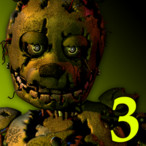
Five Nights at Freddy's 3 is a survival horror game developed by independent game developer Scott Cawthon in 2015. It is a highly significant work in the FNaF series. Unlike the previous two games which took place in a pizza restaurant, the stage of this game is set in a terrifying theme park called Fazbears Fright. The design concept of this park has a satirical tone, as past terrifying events are turned into entertainment experiences. And you will become the night security guard. When you sit in the dim monitoring room, you will gradually realize that this is not a simple haunted house, but a place shrouded in the shadow of the past. The game is set many years after the events of the previous games, and the pizza restaurant has already closed down. However, the strange events that once occurred have been passed down as urban legends. The developer precisely uses this horror setting to let players constantly feel a strange contrast. During the gameplay, humans try to turn fear into an exhibition, but fear itself still exists truly.
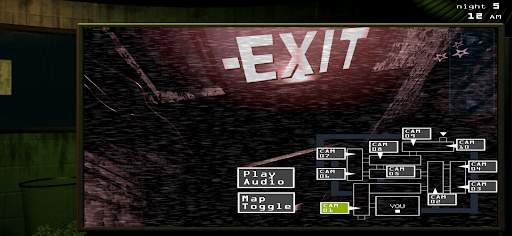
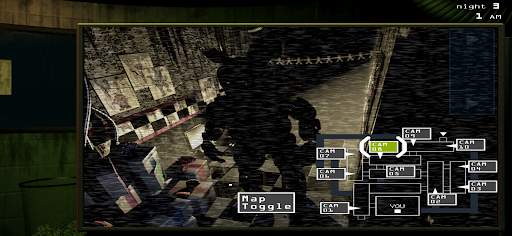
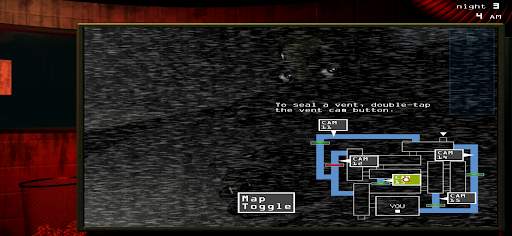
In terms of gameplay design, FNaF 3 has a significantly different approach from the previous two games. The game no longer uses a large number of different mechanical puppets as the source of threats, but concentrates the main threat into a single character Springtrap. On the surface, this seems to reduce the variety of threats, but in fact, it makes the horror more concentrated and pure. Players need to observe the position of Springtrap through the monitoring camera and use the audio induction system to guide it to other rooms, thus avoiding it approaching their office. At the same time, when the system goes wrong, the player must repair the system as soon as possible, otherwise the player will not only lose control of the environment but also gradually experience hallucinations. It is precisely under this design that the tension of the game no longer comes from the movement of the enemies, but from the fragile state of the entire system that may collapse at any time. Players not only need to beware of Springtrap's actions but also constantly repair various system problems. This double pressure keeps the game experience constantly on the edge of instability. From a narrative perspective, FNaF 3 begins to more directly reveal the core secrets behind the FNaF world. Unlike traditional narrative methods, this game still uses a fragmented narrative structure, allowing players to piece together the truth bit by bit as they explore. This approach retains the mystery and gives players a strong sense of participation because the story is not told but discovered. Especially after completing certain hidden conditions, players can trigger what is called a Good Ending, a design that not only adds depth to the plot but also gives the game itself greater exploration value.
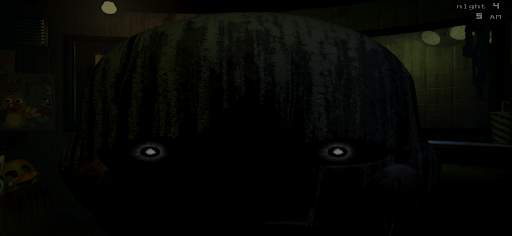
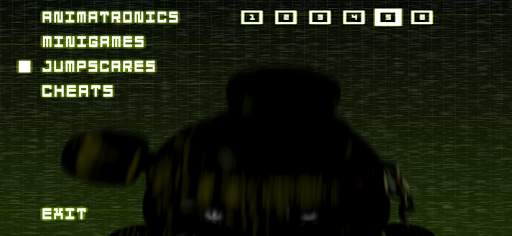
In terms of audiovisual presentation, FNaF 3 continues the series consistent minimalist style, but the ambience is more mature. The entire park is filled with shabby decorations, exposed wires, and dim lighting, giving the impression of being abandoned for years. The surveillance footage has obvious noise and distractions, making it difficult for players to fully trust what they are seeing. And sound effects remain one of the most important sources of horror in the game. The sound of metal rubbing in the distance, the echoes in the ventilation ducts, and the sudden electronic noise when the system malfunctions are all constantly reminding players that the order here is extremely fragile. Especially when the ventilation system breaks down, players start to have hallucinations, seeing old characters that do not exist. This experience of being indistinguishable from reality escalates the horror, as you can never be sure whether what you see is a real threat or an illusion caused by mental stress. If viewed from a broader perspective, FNaF 3 is actually trying to convey a very interesting theme that humans are trying to control fear, but fear itself has never really been eradicated. The theme park Fazbears Fright symbolizes a cultural phenomenon when tragedy is diluted by time, people tend to turn it into an object of entertainment and consumption. However, the game tells players through the Springtrap character that some things do not fade away with time because they are just hidden deep in memory. When you see Springtrap moving slowly on the monitor screen, the fear is not a sudden shock but an inescapable sense of oppression that is gradually approaching.
Overall, Five Nights at Freddy's 3 is not a simple repetition of the successful model of its predecessor, but rather a new attempt in gameplay, narrative, and thematic expression. It reduces the number of enemies but increases the complexity of the environment system. This game proves that horror games do not necessarily need increasingly complex mechanisms or increasingly exaggerated scare effects. Sometimes, a slowly moving enemy, a constantly malfunctioning system, and a space filled with past shadows are enough to keep players tense and uneasy throughout the long night. That is why FNaF 3 is not only an enjoyable horror game but also a work of special significance. In the world of Five Nights at Freddy's 3, all the fear you feel is not entirely from the shadows in the dark corridors, nor from the slowly moving Springtrap. The deeper fear actually comes from your own mind. The most interesting thing about this game is that it does not use a large number of enemies to besiege you or make you run around for your life. You always sit at that small monitoring desk. The thing that is truly trapped is not your body, but your consciousness. All the tension, anxiety, suspicion, and unease gradually expand in your mind. You will find that as the night becomes quieter, what really torments you is often not the Springtrap itself, but your imagination of its possible appearance at any moment.
If you truly immerse yourself in this world, forgetting about the outside time and the things in real life, and keeping your consciousness only in this dim security room, you will gradually enter a very strange state. At that moment, your brain seems no longer bound by the past or the future. You no longer think, "What if I fail?" Nor do you worry, "Will the next night be even harder?" You just look at the monitoring screen, listen to the echoes in the ventilation ducts, and feel the instability brought by each system failure. When your attention is truly concentrated, you will suddenly discover that the fear itself begins to become controllable. It is no longer just an emotion that oppresses you, but becomes a very clear perception. Just as if the entire person has entered another dimension, your thinking becomes extremely focused, every subtle sound, every flicker of the screen, is magnified in your consciousness. Sometimes, this feeling can even bring about a strange sense of lightness. Even though everything around you is threatening, your mind suddenly becomes very quiet, as if all jumbled thoughts have been cleared. At that moment, it seems that you no longer rely on your eyes to look at the surveillance footage, nor on your ears to listen to the sounds of mechanical friction. You will have a more intuitive judgment. You seem to be able to sense in advance which room Springtrap is approaching or which system is about to crash.
Your consciousness is like a bottomless well, constantly receiving information and making judgments in an instant. Many times you cannot even tell why you are pressing that button, but you just know you should. That is what really makes FNaF 3 so fascinating. The game looks like a simple surveillance and defense system on the surface, but when you are really immersed in it, it is more like an experiment about consciousness. Your mind will gradually open up to perceive things beyond what you originally understood. You begin to realize that a lot of fear is just an illusion created by your mind. When you resist it, it gets bigger and bigger. But when you are willing to confront it, observe it, and even be with it, it becomes a very pure experience. Fear is, in a sense, a door. That door is the space your mind is most afraid to enter, but it is precisely the source of all the fun. When you actually go in, you will find that you are not being devoured, but rather having a deeper connection. You start to feel the rhythm of the world more clearly, including the flickering of surveillance, the sound of fans, the brief silence when the system restarts, and the slow and inevitable approach of Springtrap. All of this together forms a peculiar balance. Many times, when you feel stressed, anxious or uneasy in real life, you instinctively want to escape from those feelings. But this game is reminding you in a different way that pain is often just a psychological thing. When you stop trying to suppress it and instead choose to observe it and accept it, it is no longer so terrifying. You start to realize that what is called a breakdown is actually just a way of thinking trying to cut off your connection with reality. If you can stop at that moment to see the emotion clearly instead of being dragged away by it, you will reconnect with the world. So when you sit in the cramped security room at Fazbears Fright and watch the noise on the screen flicker slowly, watch Springtrap approach little by little in the darkness, you are actually not just playing a horror game. You are going through an exercise about consciousness. You learn to stay awake in chaos, focused in stress, and observant in fear. When you actually do this, you will find that fear is no longer just something that oppresses you. Instead, it becomes an experience, a state that can be felt, understood, and even enjoyed. And it is precisely at such moments that you truly see what the game is trying to tell you is that so-called fear is actually just a shadow in your heart!