Editor's Review:
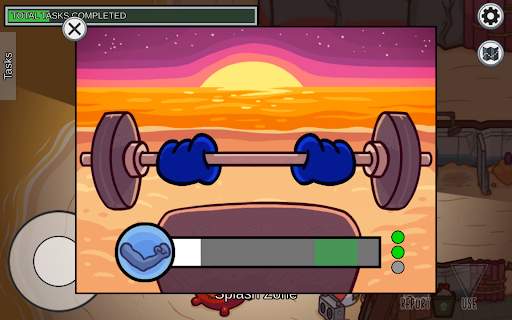
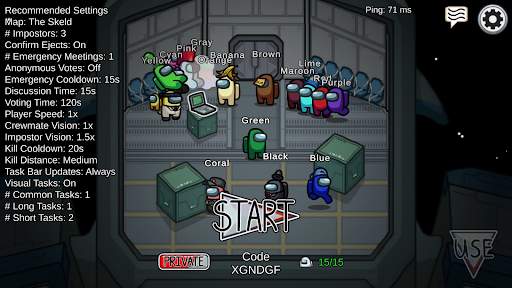
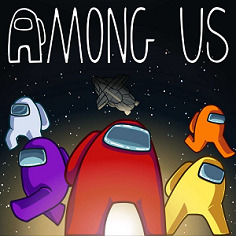
Among Us is a seemingly simple yet highly profound multiplayer social reasoning game. Its success does not rely on complex systems or exquisite graphics, but is built on the core experience of "distrust among people". The majority of similar games place a lot of emphasis on manipulation, but Among Us takes the opposite approach by focusing on communication, judgment, and psychological pressure, thus creating a unique charm. From the perspective of gameplay, the rules of Among Us are very intuitive: players are divided into two camps, the crew and the impostor. The former wins by completing tasks or voting out the impostor, while the latter disrupts the situation through assassinations and disguises. However, it is precisely this combination of "simple rules and hidden identities" that makes the game extremely complex in actual matches. The asymmetry of information makes every detail potentially a key clue and every statement full of risk and strategy. Looking further, the real core of the game is not the task system, but the discussion phase. Whenever someone reports a corpse or initiates a meeting, the game switches from the "action phase" to the "verbal phase". In this process, logical reasoning, expressive ability and even tone of voice can affect the judgment of others.
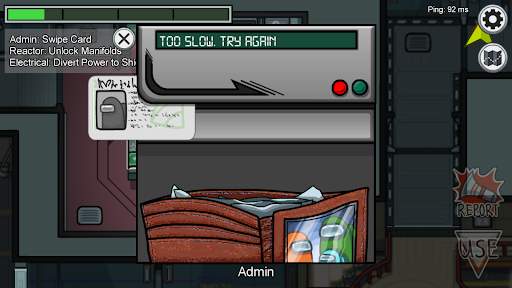
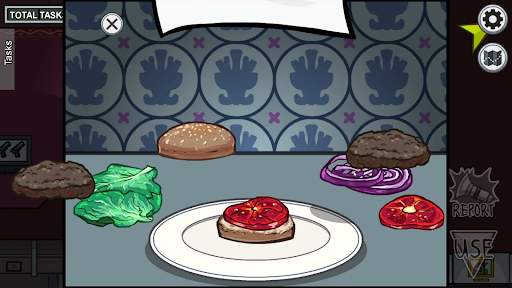
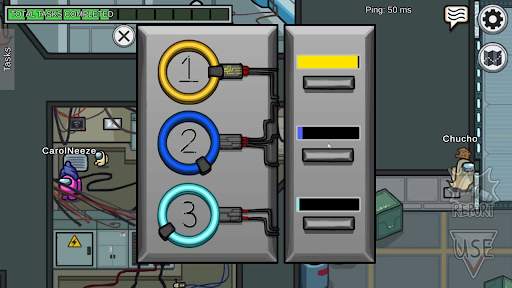
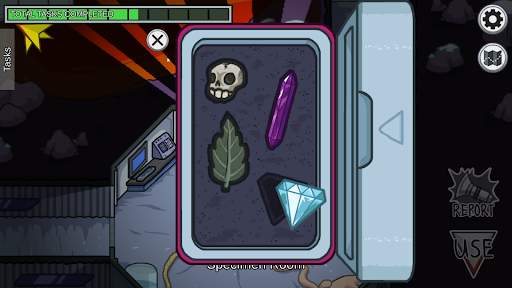
It can be said that Among Us has transformed the realistic and useful ability of "persuading others" into a game mechanism, making players participate in a miniature social experiment in an intangible way. Psychologically, Among Us shows a disassembly of the "trust mechanism". Players need to build trust in a very short time and be ready to overthrow it at any time. This constant process of building and breaking relationships makes the game dramatic. One of the most fascinating aspects of the game is the shock of a twist, especially when a fully trusted player is suddenly exposed as an impostor. In terms of presentation, Among Us adopts a minimalist art style. The character design is simple yet highly recognizable, and the map structure is clear and understandable. This visual expression without too much complexity intensifies your focus on "behavior" and "dialogue". At the same time, the simple sound effects and sudden alarm sounds successfully create a tense atmosphere, keeping the player on alert all the time. From an innovative perspective, what makes Among Us unique is that it turns all the players into part of the game content. The game does not offer a fixed storyline; instead, it generates new stories through interactions among players. Each round offers a completely new narrative experience, and this player-driven content generation model makes it highly addictive. Of course, there are certain limitations to the game. For example, the gameplay may seem repetitive after long hours of experience, and the types of maps and quests are relatively limited. At the same time, the game is highly dependent on the quality of communication between players. In addition, some issues, such as cheating or collusion, can also undermine the fairness of the game.
What truly makes this game addictive is not just about finding the true impostor, but rather the exciting process of deduction and suspicion you go through in each round, which will also test your intelligence. Gradually, you will learn how to penetrate the surface and see the true intentions behind a person's "disguise". You will discover that some players do not win by luck, but are particularly good at acting. They will deliberately say something wrong, make a seemingly unreasonable move, or even deliberately create an illusion of "I'm nervous", "I'm innocent", or "I know nothing". They are not simply playing the role, but actively clouding your judgment. You will constantly oscillate between truth and falsehood. This experience makes Among Us not just a game, but more like a training on observation, deception, and psychological resilience. And precisely because of this, the most fascinating aspect of this game lies in its continuous testing of player's judgment. Often, the truly dangerous person is not the one who acts the fastest, but the one who most influences other's thinking. He may not kill directly, but through an ambiguous statement, he leads suspicion towards the innocent: he may deliberately act clumsily to make others underestimate him; he may even say wrong information at critical moments, causing the entire room to fall into chaos.
Facing these external disturbances, you will gradually realize that the key to winning the game is not blindly following the majority's voice, but being able to hold onto your own judgment. This ability is precious in the game and also rare in reality. One particularly wonderful aspect of Among Us is that "speaking" itself is also a clue. The voices, ways of explaining oneself, and reactions when being questioned, the pauses, or the trying to steer the conversation in a different direction, all of these would become an unspoken sign. On the surface, everyone was just chatting, arguing, and voting, but in reality, everyone was unconsciously revealing themselves. Some used exaggerated emotions to hide their unease, some used excessive calmness to disguise innocence, and some revealed logical flaws in their seemingly natural exchanges. The most interesting part of the game is that you start learning to read all the details, like deciphering a code, and then you can piece together the information you find through different tones and reactions to reveal all the player's true identities. Even if each player is wearing a mask only this player knows, you can clearly see what they are hiding and what they are revealing, which is amazing. You know everything but you will not say anything until the last second.
At first, you might only focus on the surface: who runs faster, who acts alone, who speaks first. But as you play more, your observations will become increasingly detailed. You start to notice who always adds their opinions after others have spoken, who always gives vague answers on key issues, and who, despite having logical flaws, is particularly skilled at stirring emotions. You will discover that often, it is not the behavior itself that reveals a person, but how they explain their behavior. Thus, the "finding the impostor" in the game gradually evolves into a recognition of human nature and performance. After playing this game for a long time, the perspective of the players will also subtly change. You are no longer just a participant who is eager to prove your own innocence, but will gradually become an astute observer. You start to observe like an outsider, not rushing to draw conclusions but first observing everyone's every move: who is acting, who is probing, who is taking the opportunity to set the tone, and who is overdoing it to create a "credible persona", which makes the experience truly wonderful. You feel like standing outside the mirror, watching everyone perform inside. Some acted convincingly, some had too obvious acting traces, and some thought they had deceived everyone, but had already leaked the truth unconsciously. You would shift from simply "playing the game" to "watching all the players act and perform", and which is precisely the deepest and most intriguing charm of Among Us. From this perspective, the reason why Among Us is excellent is not only because it designs a fun identity system, but also because it turns the process of observing others into a thrilling experience. It allows you to gradually build a more acute insight through repeatedly being deceived. You will go through a cycle of suspicion, reversals and self-correction. You will learn not to believe easily and not to be rash. You will understand that emotions can be manipulated and language can be beautified. And what you can truly rely on is your capture of details and your adherence to logic.
When you finally accurately identify the person who is best at disguising from a chaotic stream of statements, that feeling is not just about winning the final victory, but rather like seeing through a carefully planned play. Therefore, the most innovative and fascinating aspect of this game may lie here. On the surface, it is a light-hearted party game, but in reality, it teaches you a valuable lesson about judgment, trust, and the manipulation of human nature. It allows you to train your observational skills. Unconsciously, you will learn how to maintain clarity in chaos and how to search for truth in lies. And when you truly grow into the person who can identify masks through signs and calmly examine the overall situation as an observer, you will find that the satisfaction brought by this game has already exceeded the ordinary "winning" and "losing" happiness. It is a sense of seeing the performance, recognizing the disguise, and ultimately mastering the situation. This kind of feeling is amazing, indeed! Overall, Among Us is an excellent social game with a high level of engagement and very low entry barriers. It will not only entertain you but also provide you a way to observe and experience "human nature," in which winning or losing is important, but what is even more memorable are the moments filled with lies, doubts and reversals!