Editor's Review:
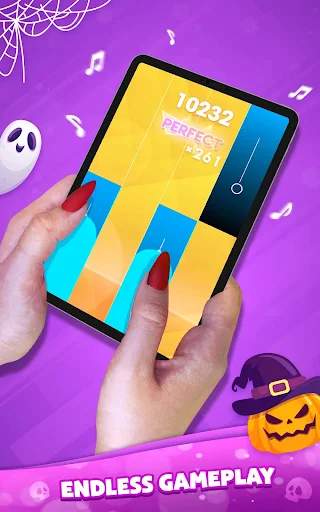
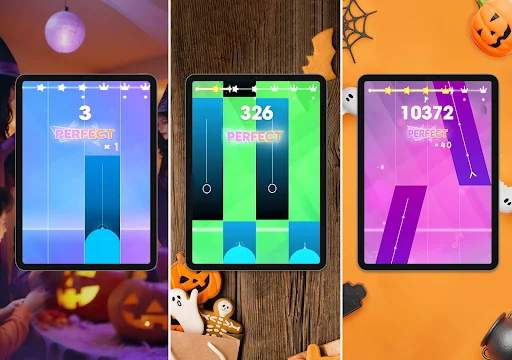
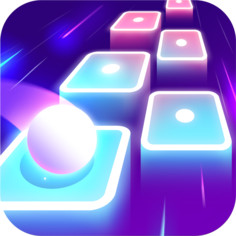
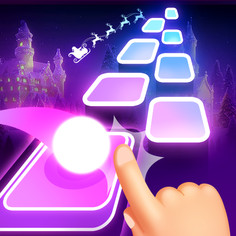
Magic Tiles 3 is a casual competitive mobile game centered on music rhythm tapping. Nietzsche said that "There would be no life without music," and this idea fits Magic Tiles 3 remarkably well. What truly makes this game compelling is not simply the act of "tapping black tiles to the beat," but the way it compresses music, reflexes, tactile feedback, emotional highs and lows, and the desire to compete into one short yet intensely focused session after another. The whole process of playing is surprisingly absorbing. Its rules are simple, but once you spend enough time with it, you begin to see clear layers of depth. You move from casually tapping along, to studying chart patterns, speed, sliding notes, and extreme reaction windows, and even to noticing which mental state helps you break your records. It does not rely on complicated systems to hold your attention. Instead, it uses a very direct and very pure feedback loop. As for the gameplay, Magic Tiles 3 requires players to follow descending note lanes through tapping, holding, and repeated presses in sync with the music. The brilliance of this design lies in its accessibility. Anyone can pick it up and finish a few rounds. But its skill ceiling is far higher than it first appears. A beginner may think it is only a reflex game, yet after playing for a while, it becomes obvious that strong performance depends on much more than fast fingers.
What really matters is rhythmic anticipation, visual stability, touch accuracy, the ability to stay composed under pressure, and familiarity with the structure of the music itself. In other words, it is not enough to just "tap what you see." You have to think ahead by half a beat: your eyes track the next lane, your hands handle the current beat, and your mind is already preparing for the pattern that follows. That multi-layered processing is exactly why the game stays engaging over time. Once you get into the game properly, the real thrill does not come from average-speed songs, but from daring to challenge the fastest tracks available. The game understands player psychology very well. Its difficulty progression is clear: first you comfortably clear normal songs, then you test yourself on faster ones, and eventually you start hunting down tracks with dense note patterns, relentless speed, and almost no room for error. At that point, the game stops feeling like casual entertainment and starts to resemble serious training. Your fingers are no longer merely touching the screen; they are locking into combat with the chart itself. When the rhythm clicks, you enter a state of intense concentration and excitement. And once the topic turns to high-difficulty challenges, it is impossible to avoid Rush E, a track that many players treat as a benchmark. In rhythm-game culture, Rush E already carries symbolic weight, and within Magic Tiles 3, it functions almost like a public threshold. When you cannot beat it, it feels nearly unreasonable. But once you finally clear it, even by the narrowest margin, the satisfaction is overwhelming.
It is not just the simple happiness of finishing a stage. It is a deeper sense of validation, as though both your body and your brain have proven something real. Rush E does not demand only quick taps; it requires continuous high-speed processing, the ability to preserve rhythmic order under pressure. Many songs leave you with a score. Rush E leaves you feeling as though you have won a battle. That is why it becomes such an important dividing line for players: beating it is not only a skill check, but a sign that you have truly entered the deeper part of the game. Another strength of Magic Tiles 3 is the clarity of its sense of progression. At the beginning, you are undeniably a Noob: fast tracks overwhelm you, dense patterns throw off your rhythm, and combos break constantly. As you improve, you reach a Pro state. You learn when to anticipate, when to relax, when to tense up, and your hands start building muscle memory. Then, when you watch elite scores or high-level gameplay, you naturally arrive at a joking but meaningful conclusion: this is beyond pro; this looks like a Hacker. Of course, "Hacker" here does not literally mean cheating. It describes a level of precision so extreme that it seems to exceed ordinary understanding.
The leaderboard and world-record chase elevate that growth into something genuinely competitive. To be honest, the most addictive part of Magic Tiles 3 is not unlocking cosmetic features or collecting flashy extras. It is the moment when you realize that your high score is getting closer and closer to the top. This is especially true when you have spent time refining one familiar song: moving from frequent mistakes, to stable combos, to a point where you are just one clean run away from a truly impressive rank. That feeling is remarkably similar to performance on a stage. You know the result is not luck. It is the product of repetition, correction, and practice. When your score begins approaching a world record, even if there is still some distance left, you start to feel like a superstar. That does not come from vanity. It comes from the exhilarating sense that the rhythm, transitions, and explosive moments of a song are now fully under your control. At that point, you are no longer simply playing. You are performing. This music adventure also gives you a chance to personalize your musical experience. A common problem in rhythm games is that you are limited entirely by what the developers choose to provide. Your taste is boxed in by the official song list. One of the most appealing aspects of Magic Tiles 3, by contrast, is the ability to engage with and add songs you actually like. For long-term players, this matters tremendously. When you are no longer playing "whatever the system gives you,"but songs you already enjoy, the experience changes immediately. You anticipate the melody. You react emotionally to the chorus. You understand the momentum of the beat. As a result, the game stops feeling like mechanical tapping and starts to feel like active participation in the music. You are not just performing actions over background audio. You are entering the structure of a song. Familiar songs are especially powerful because they encourage repeated practice, and the same song can feel completely different depending on your mood that day.
You will also appreciate the strange balance it creates between seriousness and absurd fun. The normal way to play is, obviously, with your fingers. But once you have spent enough time with it, you start trying all kinds of ridiculous approaches: alternating hands, one-hand challenge runs, and even attempting to play with your toes. It sounds silly, but that silliness reveals something important about the purity of the game's design. As long as you can land the motion accurately on the beat, the system will accept it. Playing with your toes is not going to become the standard way to achieve top scores, of course, but the fact that the idea even feels possible says something about the openness of the mechanics. It pushes the experience beyond pure technical challenge into something more playful and physical. Magic Tiles 3 is not a game that only works when treated with strict seriousness. It has a natural elasticity between competition and experimentation.
What really deserves to be discussed seriously, though, is its effect on the brain and on emotion. Many players avoid talking about this because it can easily sound vague, but if you have played for a long time, the changes are noticeable. At first, you are just staring at black tiles, afraid of missing notes. Over time, the music begins to guide your actions more directly. Sudden impacts, sharp accents, and explosive sounds trigger a very primal bodily response: a near-instinctive urge to follow. On another level, steady rhythm and successful combo chains produce pleasure, making you want to continue round after round. And once you begin identifying complex rhythmic patterns and understanding why certain sections are hard while others flow naturally, your brain is no longer operating through a simple "stimulus-response" loop. It is actively processing musical structure and variation. At that stage, Magic Tiles 3 is no longer just blind tapping. It begins to feel like a journey. That journey may be imaginary, and it may not have a story in the traditional sense, but it carries a real sense of movement: from calm to intensity, from restraint to eruption, from chaos to recovered order. It is imaginative, yet grounded in genuine physical participation. Within a single song, you can feel tension, pressure, release, and reconstruction. That is very different from merely grinding for points. The game activates the musical faculties you naturally possess: the instinct for rhythm, sensitivity to repetition, and the anticipation of climactic moments. After long-term play, those faculties become noticeably sharper.
This also helps explain why the game can have real emotional value. Many negative thoughts do not come from one clear source. They simply appear and occupy your attention. What Magic Tiles 3 does remarkably well is reorganize that attention through rhythm. Once you enter the lane structure of a song, stray thoughts are pushed aside, and your emotions temporarily give way to movement and sound. It is not a therapeutic tool, and it would be exaggerated to call it one, but it can genuinely pull you away, at least for a while, from loneliness, emptiness, or those sudden drops in mood that seem to come from nowhere. Especially at night, when you are alone with headphones on, playing through a few familiar tracks, there can be a very real sense that you are still connected to some kind of order. It is not about escaping reality. It is about finding a form that steadies the mind. Its social value should not be underestimated either. For such a simple game, competing with friends in Magic Tiles 3 is genuinely exciting. Because the rules are so easy to understand, anyone can join instantly. But the score differences and skill gaps are still clear enough to make competition meaningful. You can compare who clears the hard songs first, who scores higher on the same track, who drops fewer notes, or who dares to try ridiculous challenge runs. It is especially effective in face-to-face settings among friends. Since each round is short, the person who loses will often say, "One more time." That urge for immediate rematch is exactly what makes its social experience work so well. So Magic Tiles 3 is not a music game that survives on a clever concept alone. It is a rhythm game that keeps generating new meaning for different players with different skill levels!