Editor's Review:
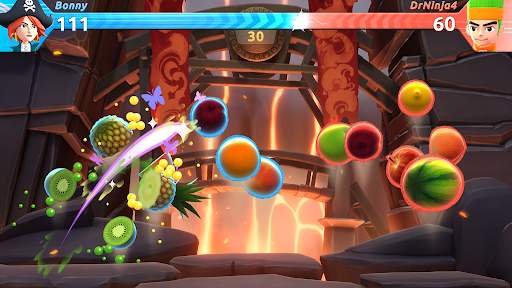
Fruit Ninja 2 is a marvelous action game. While playing this game, you will enjoy the intuitive pleasure of slicing fruits. Compared with the first version, it reorganizes rhythmic excitement, visual reward, growth feedback, and multiplayer competition into a more modern, more complete, and more sustainable experience. Fruit Ninja 2 does not merely give you a brief moment of pleasure. In a light, vivid, and direct form of interaction, it quietly adjusts the direction of your attention and your emotional state. The longer you play, the more clearly you realize that what truly moves you in this game is not only the moment when the blade passes through fruit, but also the way in which it allows you to feel that you still possess control when life is full of disorder. What you see in Fruit Ninja 2 is not only a richer selection of modes, denser rewards, and more active social competition, but a complete design structure organized around lasting participation. It no longer simply lets you come in, make a few cuts, and leave. It tries to ensure that every time you enter, there is clear emotional value and behavioral reward.
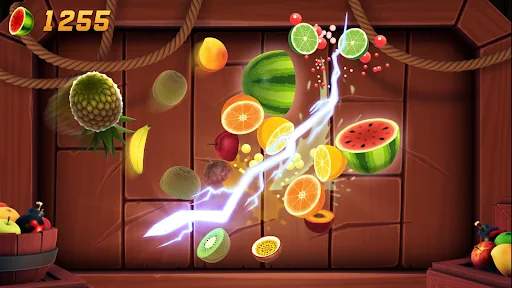
You will love the feel of control. And this feel is concrete and deeply physical. When you slice those brightly colored fruits, the sensation is truly wonderful. The fruits move with a satisfying sense of elasticity. The sliding motion follows your hand very naturally. The visual burst at the moment of impact is exaggerated without becoming cheap. The sound effect is crisp. The response is immediate. And the entire chain of action is almost free of hesitation. You do not feel as though you are pressing a button and waiting for a result. You feel that your gesture genuinely leaves an impact on the screen. Especially when a large group of fruits spread across the air and you cut diagonally through it in one stroke, the continuous visual burst creates an extremely direct sense of satisfaction. So, to a certain extent, this game gives you a kind of psychological compensation that very few casual games can provide. When real life becomes complicated, chaotic, and full of problems, one of the most common forms of exhaustion is not simply tiredness. It is the feeling that you have done many things and still cannot see a clear result immediately. You reply to messages and the problems do not decrease. You deal with work and new troubles appear again. You try to sort out your life and the situation still feels tangled. But Fruit Ninja 2 offers the exact opposite experience. Fruit rises, you swing once, and it splits. An obstacle appears, you judge correctly, and you pass it. A combo succeeds, and the score rises. A mistake happens, and the consequence is shown at once. The world of this game has no vagueness, no ambiguity, and none of that irritating delay between effort and reward. Here, your action is instantly turned into a result, and your judgment immediately leaves a mark. That feeling can make you regain some confidence, as if you could also cut through the difficult problems in real life in the same drastic and direct manner that you use to cut the flying fruits in the air. Of course, it cannot truly solve your life for you, but on the emotional level, it reminds you that you have not lost your capacity to act.
After you enter this bright, sweet, and richly colored world, you begin to notice that your attention is constantly guided toward the positive side. As human beings, we naturally tend to focus on negative things. We look at risk before opportunity, trouble before possibility, and shortcomings before strength. That is a very real psychological habit. But in Fruit Ninja 2, it is difficult to remain trapped in negative emotions for long. This is not because it forces shallow encouragement upon you, and not because it is naive. It is because it places reward, feedback, and visual atmosphere around the act of capturing the positive. What you see are ripe and full fruits, bright colors, clean cuts, and constantly emerging opportunities, not heavy, dark, or oppressive imagery. More importantly, these positive elements are not merely decorative backgrounds. Every one of them is tied to your actions. If you focus, you capture more opportunities. If you remain steady, the rhythm becomes smoother. If you perform well, the screen becomes more beautiful, the score becomes more pleasing, and the feedback becomes more complete. The game is not asking you to ignore failure. It uses a very intelligent method to bring your attention back to what you are still able to do.
Returning to the gameplay itself, Fruit Ninja 2 still looks easy to understand, but it is much more complex than it appears. After spending enough time in slicing the fruits, you realize that this is not a game that only tests your hand speed. What it truly tests is your clear judgment under constantly changing conditions. What you face are not static targets, but a collection of changing parabolic motions, rhythm windows, and signals of risk. You must quickly decide which group of fruits is suitable for a combo, when you should hold back, when you should cut aggressively, and when you must avoid interference. Many players at the beginning mistakenly believe that frantic swiping can solve everything, but once the pace becomes slightly tense, that way of thinking fails at once. The player who can truly make the whole situation flow is not the most reckless one, but the clearest one. Besides, you will also feel a sense of power while you are slicing. It is true that many games can make you feel powerful, but that power often depends on defeating enemies, destroying monsters, or suppressing opponents. Fruit Ninja 2 is different. In the process of slicing fruits, you genuinely feel as though you possess some kind of superpower. It is not the sort of superpower that comes from killing monsters or proving yourself through destruction. It is a light, precise, and aesthetically pleasing kind of ability. With one movement of your finger, a path is formed, the fruit opens immediately, and color bursts across the screen. What this process gives you is not the oppressive pleasure of saying that you have destroyed something. It is the pleasure of feeling that you can precisely alter the situation in front of you.
If you are willing to play seriously for a period of time, you will understand that what truly makes this game succeed is not only that it inherits a classic form of gameplay, but that it expands that form from short bursts of pleasure into emotional adjustment and self-confirmation. So, the most valuable new angle from which to appreciate Fruit Ninja 2 is not how much more content it has than the previous game, and not whether it is still classic enough. It is that it turns an apparently simple action into a small form of psychological training that modern people urgently need. What you cut is not only a few pieces of fruit. What you cut apart is confusion, hesitation, emotional blockage, and that powerless feeling that everything in life has become knotted together. The game never states any of this directly, but through a design intelligent enough to hold all these meanings, it allows you to confirm with every movement that you can still judge quickly, act decisively, see results, and obtain strength from those results, which is why Fruit Ninja 2 is not merely a simple game that is suitable for passing a few minutes. What is truly impressive about it is that it makes relaxation different from emptiness, makes brightness different from shallowness, and makes simplicity different from monotony. Every time you slice fruits, you can see the direct consequence of your movement, and you can feel a sense of control that is almost like a superpower. And in the present day, that sense of control is genuinely precious. Real-life situation is often slow, vague, and repetitive, while this game gives you sharpness, clarity, positivity, and effectiveness. So slicing all the colorful fruits in this world is not simply about having fun, it is more about getting deep emotional satisfaction!