Editor's Review:
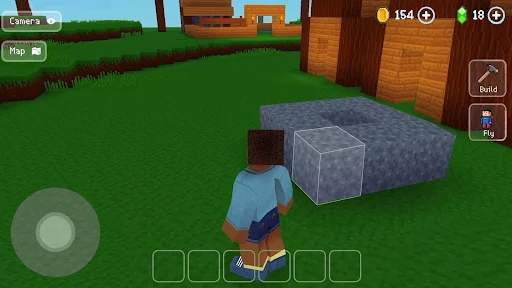
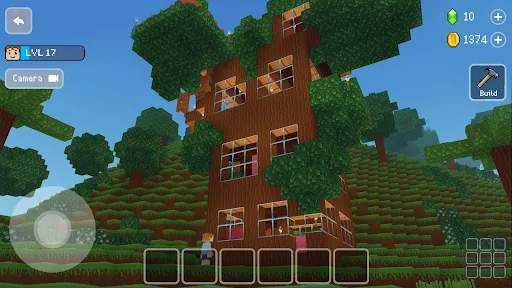
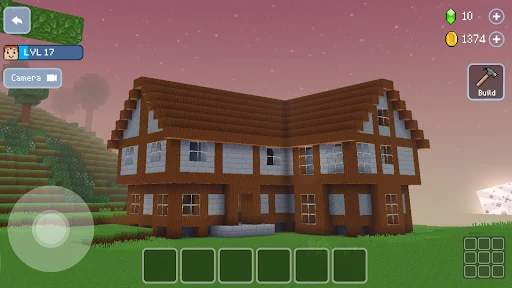
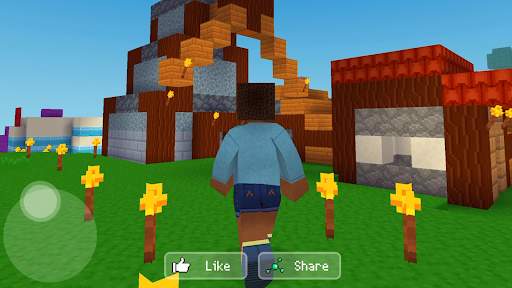
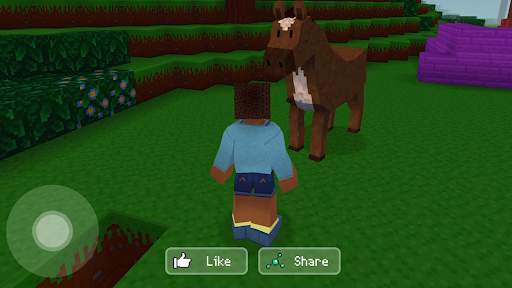
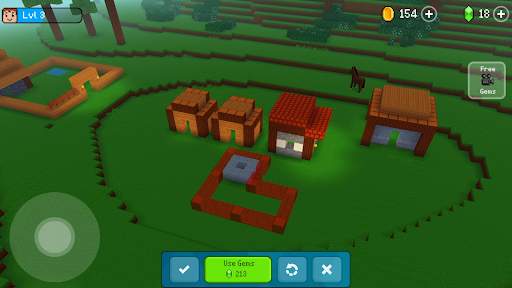
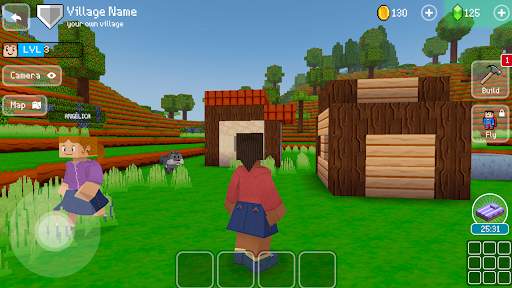
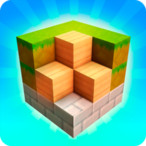
Block Craft 3D: Building Game is a relaxing crafting simulation game. At first glance, you may think this is a sandbox building game with limited content. But after you play for a while, you will find the whole atmosphere is more relaxing, and you can build your own village in this world. In the meantime, you can also select your own characters, interact with the cute pets, and build whatever you want. In this open world, your crafting desire will be met with immediate feedback. Even if you do not have a long period of time, you can always get the satisfaction of building different structures during your spare time, and the building freedom in this world is not restricted by rules, enemies, the landscape, or complex systems. You will enjoy a kind of freedom that gives you space to do lots of things, and you can create so many things within a short period of time. It is so satisfying to quickly see the silhouette of the house you want to build. If you want to expand your city, you can see the growth and expansion of your city without spending too much time in this world. And you do not need to patiently wait for it to come through long and hard work; you will enjoy a kind of crafting process with rhythm, stability, and instant feedback. This is also why players around the world love this game so much. Playing this game does not force you to study complex game mechanics, and it does not put emphasis on pushing players to study and grasp the rules from scratch. Instead, the threshold for playing this game is very low. There is no need for you to prove how sophisticated a player you are; you just need to relax yourself and come into a flow state of purely enjoying the building process without worrying about anything else.
Its charm does not lie in whether or not you can build things that are unprecedented in human history. Instead, it puts more emphasis on whether or not you want to keep crafting in this world. It can constantly satisfy your crafting desire. You can craft and build anytime. Even if you just have several minutes or half an hour, you can still have the chance to make yourself comfortable and craft something that you like. But this whole game world does not try to capture your attention by creating a mysterious atmosphere; instead, it wins your heart by quickly giving you instant feedback. Whenever you complete expansion or arrangement actions, you can just regard this unlimited open world like a blank canvas on which you can always draw your own picture. You will not move forward because of unknown threats. You keep crafting because there is extra space. You are willing to spend your time filling the blank space. Actually, it is psychologically satisfying for human beings to make a place more complete. While you are crafting in this world, you will not feel overwhelmed because of overly complicated visual information, nor will you feel mentally burdened by the interfaces and the environments in this world; instead, you feel that you have a building table of digital blocks that you can keep returning to and fully immerse yourself in.
What deserves even more credit is the sense of ease you enjoy while you are building in this world. Many similar games today claim to be casual, but in practice they are filled with leaderboard pressure, social comparison, and all kinds of external stimuli. But in this open world, you just need to pick up and build, and then you can choose to expand your world gradually. You will enjoy the satisfaction of making this place resemble the vision you have in your mind. And the simple pleasure of crafting in this world is neither complex nor profound, but it is pure. This open world gives you the chance to have a little world of your own. You can build it up slowly, piece by piece. When playing this game, you will gradually realize that what is being filled up bit by bit is not just the empty space on the screen. At the beginning, you just mechanically place buildings, fill in roads, and organize layouts as if you were completing a very light goal; but as you play, that process of "making the chaos clear and the blankness complete" will quietly transform into a very subtle sense of psychological stability. A sense of solid satisfaction will arise in your heart as you look at areas that were once scattered, desolate, and shapeless gradually growing streets, houses, decorations, and order under your own arrangement. This satisfaction is not intense, nor is it the kind of excitement that bursts out in an instant. It is more like a slow-sinking calmness, as if you are not organizing a virtual world but reorganizing some kind of inner rhythm for yourself. Many times, what people really long for is not a grand sense of victory, but the confirmation that "I can put some things in place," and this game precisely provides that confirmation very steadily.
The experience is so captivating because, in real life, people's emotions and daily routines are often not as easy to organize as the space in the game. The stress in reality is scattered, the exhaustion is vague, and many things have neither clear boundaries nor immediately visible results. You may have been busy all day and still feel that life is like a pile of unfinished threads, here and there, a little bit of everything, with nothing really done. But in this game, with every move you make, the world gives you a clear response: this building has been erected, this piece of land has been utilized, this road has finally been connected, this area is beginning to look like a truly complete place. It is precisely because this feedback is clear enough that it gives players a rare feeling that chaos can be dealt with, that blankness can be gradually shaped, that order is not a distant thing but can be gradually established through small movements one after another. What you practice in the game is actually a gentle ability to organize, and this ability does not just remain on the screen.
So, after playing for a long time, that sense of order often starts to permeate real life. It may not change you in a dramatic way, but it will influence your perspective on daily life in a very natural way. You may be more inclined to tidy up your desk, to prioritize your to-do list, and to complete the small things that you originally wanted to procrastinate on, because in the game you are accustomed to a way of thinking: even the emptiest space can be tidied up starting from one small piece; no matter how messy the structure is, it can gradually become clear by piecing the parts together one by one. You start to believe that many of the most frustrating problems do not need to be solved all at once. Instead, you just need to lay down the first brick, build the first road, and settle this small patch of space right in front of you. This kind of thinking sounds simple but is very valuable because it shifts from "I must take control of everything right away" to "I can do a part of it first," which is an important way for many adults to regain order in life. More importantly, the sense of order in this game does not carry that compulsive desire for control. It does not force you to be efficient, nor does it force you to train yourself to be always tense. Instead, it offers a very soft, self-generated order. You are not being pushed by external rules, but rather, at your own pace, gradually arranging a world in a way that makes you feel comfortable, according to your own preferences. It is precisely because this process is voluntary enough and light enough that it is more likely to generate true psychological identification: this is not something others have asked me to do, this is what I myself want, that is, to make it a little neater, a little more complete, a little more like what I envision in my mind. And when one begins to repeatedly practice this process of "establishing order out of one's own will" in the virtual space, many things that would otherwise seem oppressive in reality become less difficult to face. You will gradually realize that order does not necessarily mean stiffness, and organization does not necessarily mean pain; it can be a way to live more comfortably.
So perhaps the most hidden and intriguing part of the game is not the building itself, but how it gradually returns an internal feeling to the player through building. You originally just wanted to kill some time, but instead, in the stacking of brick by brick, tile by tile, grid by grid, you regain a sense of being able to put life in order. The world you fill will eventually be like a very quiet mirror, allowing you to see that you are actually being reorganized. The named blocks, the straightened buildings, the planned spaces often correspond to something that has gradually taken its place in your heart. You may not notice it immediately, but when you exit the game and return to reality, that slight yet real sense of calm will linger, making you feel that today's life does not seem so scattered, so chaotic, so out of control. It may not really change reality, but it changes the way you enter reality. And for many people, this kind of inner shift is something genuinely precious!