Editor's Review:
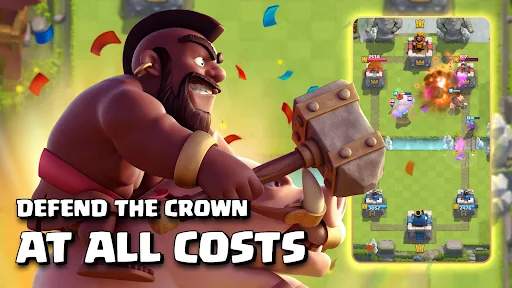
Clash Royale is a PvP strategy game that combines real-time strategy, deck building, tower defense, and light MOBA style combat. Judging Clash Royale only by whether it is fun is not enough. What truly makes it impressive is the way it compresses a complex strategic duel into just a few minutes. Resource management, psychological judgment, mechanical details, and self-correction after failure are all packed into one vertical screen. You are not facing a cold string of numbers. You are facing a real opponent who can test you, make mistakes, get greedy, become impatient, and suddenly launch a beautiful counterattack, just like you. After playing for a long time, you will realize that the core pleasure of this game is not drawing a legendary card, nor seeing a certain deck suddenly become stronger. It is whether you can keep thinking under pressure. There is a line in The Art of War by Sun Tzu that fits this game very well, "Know the enemy and know yourself, and you can fight a hundred battles without disaster". In Clash Royale, this line is not decoration. It is almost the logic of victory itself. You not only need to know how your own deck wins, but also need to read the cycle, elixir, habits, and emotions of your opponent. Once the opponent has just used Log, your Goblin Barrel has an opening. If the opponent is forced to place a building in the wrong position, your Hog Rider may reach the tower in the next cycle. If the opponent has already used Fireball, your rear units Musketeer or Witch becomes much safer.
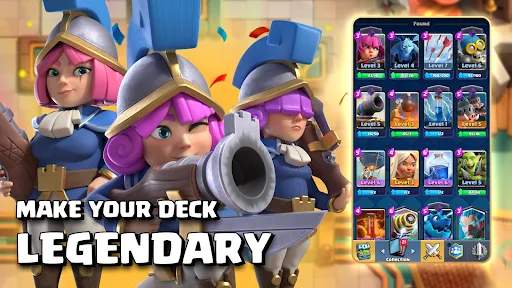
A true winner in this world is not someone who attacks all the time, but someone who knows when not to play a card. The match structure of Clash Royale looks simple. Eight cards, ten elixir, two Princess Towers, and one King Tower. But the depth of the game comes from limitation. You cannot bring everything, so every card means a trade off. If you bring a building, you sacrifice some attacking flexibility. If you bring a big spell, you may lose a cycling option. If you choose a high elixir push deck, you must accept being pressured by fast decks in the early stage. The game forces you to build a complete battle philosophy within limited space instead of casually putting strong cards together. After playing for a long time, you will gradually understand that determination and strategy truly determine success. You may lose half a tower to an early push from the opponent. You may lose tempo because of a misplaced Fireball. You may be pressured so hard before double elixir that you almost have no room to fight back. But as long as you do not give up, the situation is still moving. Many comebacks do not come from luck, but from continued calculation while you are behind. You will constantly try to figure out questions like, "Can this push be defended with only Knight and Ice Spirit? Can this low health Musketeer turn into a counterattack? Should I give up a little tower health in exchange for a bigger elixir advantage in the next wave?"
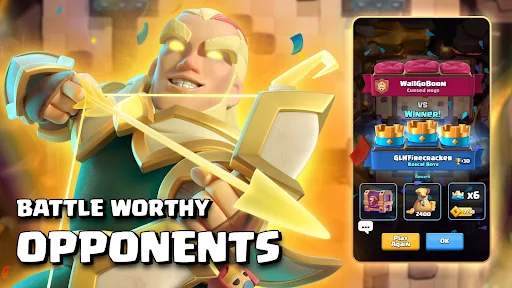
The cruelest and most fascinating part of this game is that it does not comfort you, but it rewards clarity. Failure in Clash Royale feels particularly real. When you lose, you often know exactly where you went wrong. The reason for your failure could be one of the following: you played too aggressively at the bridge, your defensive placement was poor, or you tried to force a counterattack while behind on elixir. Unlike some games, you cannot easily push the blame onto teammates. Most of the time, you have to face your own misjudgment. Yet, this is exactly why every failure has value. From losing streaks, you learn to track your opponent's cards. From being punished by Balloon, you learn to save a building. From being slowly worn down by Miner Poison, you learn to protect your rear units. From being counterattacked by P.E.K.K.A., you learn not to give away your offensive core too easily. You taste the bitterness of failure, but failure is not the end. It is the most useful training before the next match begins. Many times, the strongest move is not to play immediately, but to hold back. You wait for the opponent to use a key counter, wait until they lack elixir, wait until they think you will not attack, and then use a counterattack to turn the situation around. This kind of explosion after restraint gives a stronger sense of achievement than simple mindless aggression.
In terms of game experience, Clash Royale is not a game that only encourages victory. It is more like a game that trains your competitive character. You will get angry, lose control, feel unfair, and want to quit after several losses in a row. But if you truly keep playing, you will find yourself becoming calmer. You begin to accept small losses, plan the next cycle, and understand that sometimes maintaining tempo matters more than protecting tower health. You will not only have this strong desire to win. You will also start asking why you lost. This is what gives the game more depth than many mobile games. It allows you to constantly chew on your own strategies while being entertained. Of course, it is not perfect. Card levels, resource acquisition, and paid progression do affect ladder experience. When you create an advantage through better performance but still get overpowered because of card level differences, the frustration is obvious. The ideal competitive state of the game should be a contest of strategy and execution under fair levels. The part that most easily drives players away is also the conflict between the progression system and competitive fairness. Even so, the game remains difficult to replace, because the core battle framework is strong enough to make you want one more match after a round ends.
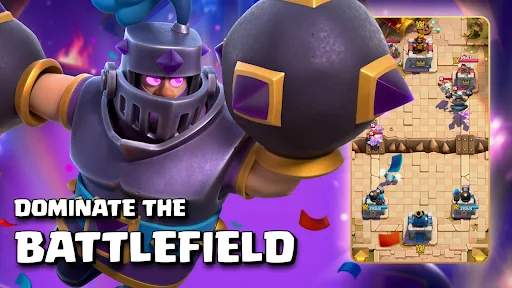
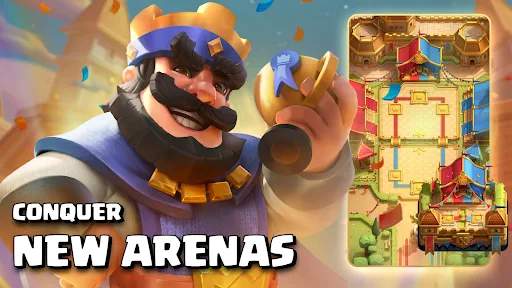
In terms of art and sound, it continues the exaggerated, bright, and highly recognizable style of Supercell. Characters such as Knight, Prince, Baby Dragon, and Goblins are not just cute. They also serve battle judgment. You can quickly see where the threat is coming from, which card is locking onto the tower, and whether you need to defend in the next second. The sound of Fireball landing, the rhythm of Prince charging, and the moment when a Princess Tower falls all make the emotions of victory and defeat feel very real and direct. It is not so complex that ordinary players cannot understand it, and it is not so simple that veteran players lose room for further exploration. You will feel real passion while you are playing this game. Your heart will race because of an extreme defense. You will remember a perfect counterattack for a long time. You will also regret losing a match that you should have won. But it is exactly these emotions that make you look forward to the next challenge. You do not keep playing because you win every match. You keep playing because you know you can still become stronger. Next time, you will be more cautious and more decisive; and you will make a better choice when you are faxed with the same situation. So this game does not test simple hand speed or card rarity. It tests whether you can always make the right decision under great pressure and with limited time and resources. You do not need to worry about having no backup, because the real weapon that can defeat your opponent is not only the cards in your collection. Actually, it is the fighting spirit inside you. Carrying this fighting spirit to the battleground will always make you willing to join another battle and never give up. As long as you are still willing to adjust your strategy, persist in fighting to the last blood, and press the button for the next match, you are already becoming stronger! Of course, you may feel pain and frustration out of the repeated failure. But in the meantime, you need to first accept the painful feeling and learn from your past mistakes. Frustration due to failure only means you are becoming stronger. So if you are a player who has the desire to become a true warrior with a clear and clever mind who is capable of making the perfect strategy to conquer and crush all the enemies, you should definitely try this game because the final victory will be yours!